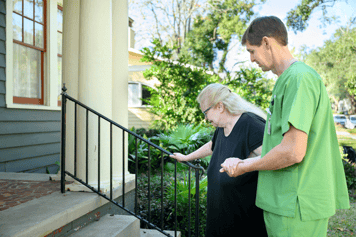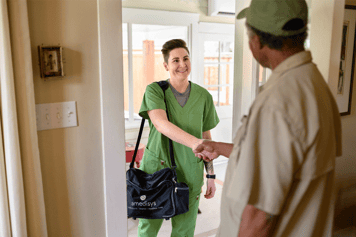
Most of the time, when people think of home health care, they picture receiving care in their private residence or the home of a family member. But what if your home is a senior living community or assisted living facility? If you are wondering where you can get home health care and if it is right for you, this article explains the basics to help you decide.
Do I Need Home Health Care or Personal Care?
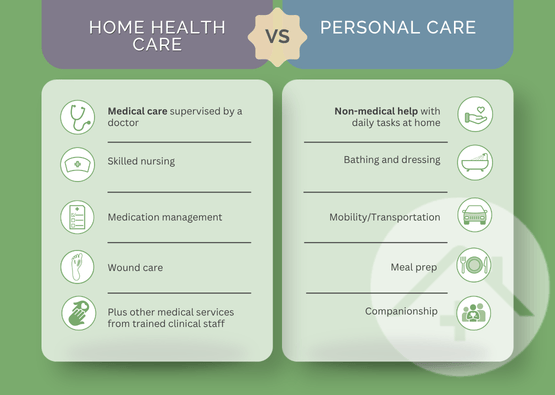
Before learning about where you can receive home health care, it may help to understand the difference between home health care and personal care. Home health care is medical care. It is ordered by a doctor and given by trained medical professionals. Services may include skilled nursing, medication management, wound care and therapy. Personal care is non‑medical help with daily tasks like bathing, dressing, meal prep, mobility and companionship, typically provided by trained caregivers rather than clinicians.
Am I Eligible for Home Health Care?
It’s important to know that if you are considering medical care at home, you must meet the home health care eligibility criteria. 1 Home health eligibility requires that a person be under a doctor’s care, need skilled medical services such as nursing or physical, occupational, or speech therapy and be considered homebound, meaning leaving home is difficult and requires considerable effort or assistance.
The care must also be medically necessary, ordered in a certified plan of care, and provided by a Medicare‑certified home health agency. Home health care is usually short-term. It helps people recover from or manage a health condition, not provide daily long-term care.
My Doctor Says Home Health Care is Right for Me—Where Can I Receive It?
Let’s take a closer look at where people can receive home health care—and where they can’t.
1. Home Health in a Private Home
Most of the time, home health care is provided in a person’s own home or the home of a family member.. Patients receive regular visits from a team of people with different specialties. For example:
- A nurse works with your doctor to create your individualized plan of care. The nurse may also provide wound care and ongoing assessment, educate on medications and check on your pain and overall health.
- You might also work with a physical therapist, speech therapist or occupational therapist. These specialists can help you regain strength and balance, communicate, and do everyday tasks.
- If you need help with daily activities like bathing and dressing, a home health aide can visit you.
- A medical social worker can provide counseling and emotional support. They can also help you find community resources to support your recovery.
Family members or caregivers help with daily needs. The home health team teaches them how to safely support you at home. If you need help after hours, on-call support is available 24 hours a day.
[action 1]
2. Home Health in an Assistive Living Facility or Senior Living Community
Senior living communities are considered a patient’s place of residence, or their home. However, the care provided in assisted living and senior living communities is non-medical care. Their core services focus on help with daily activities—bathing, dressing, meals, medication reminders, mobility, and social support. 2 They typically do not offer skilled nursing, wound care, injections, or therapy services on their own.
If you need medical services in an assisted living facility or senior living community, the home health team can come to you. Depending on your needs and doctor’s orders, you may receive skilled nursing care, physical therapy, occupational therapy, speech therapy and social worker services. With regular visits, education, and monitoring, home health care may help prevent hospital visits and support a safe stay in senior living. 3
Residents are sometimes happier when home health care is involved. This is, in part, because the home health agency and senior living community work together to provide the best possible care. If you have an emergency after-hours, home health is there 24 hours a day, including nights and weekends. If you need to go to the hospital or a skilled nursing facility, the home health agency helps make the transition back into senior living smooth.
Where Home Health Care Is Not Available
Home health care is not typically covered in any type of inpatient facility. This includes a:
- Hospital
- Skilled nursing facility
- Nursing home
- Long-term care facility
- Other institution
Is Home Health Care Right for You?
Home health can help you stay safe and independent at home. Research shows it can also help you lower the chance of going back to the hospital. Home health care is covered by Medicare and most insurance plans for qualified patients. You might benefit from home health services if you’ve had:
- A recent hospitalization or emergency room visit
- Multiple, frequent visits to your doctor
- A recent fall or feel unsteady
- Weight loss or gain in a short time
- Increase in confusion or clouded thinking
- A new medication or change in medication
- Changes in behavior, such as feeling depressed or isolated
- A wound, skin tear or other injury
- Difficulty bathing, dressing or doing other everyday activities
- Difficulty managing your blood pressure or blood sugar
- A new assistive device like a walker or wheelchair or trouble using your device
How Do I Get Started with Home Health Care?
Now that you know where you can get home health care, how can you find the best home health agency to begin care? Choosing the right home health agency is important.
Here are few things to ask about:
- Is the agency Medicare/Medicaid certified? For eligible patients covered by Medicare or Medicaid to receive care, the agency should be certified by those agencies.
- What home health care services are offered? Not all agencies offer a full range of services, and some offer specialized home health care programs.
- What is the agency’s reputation and history? How long has the agency been offering home health care and what kind of consumer reviews do they receive?
- What are the agency’s quality scores? The Centers for Medicare and Medicaid services monitors and reports on the quality of home health providers. You can review scores at Care Compare.
- Can the agency describe staff credentials? Do staff receive any special certifications or training?
- What are the agency’s patient satisfaction scores? Medicare’s Home Health Consumer Assessment of Healthcare Providers and Systems (HHCAHPS) Survey helps track how satisfied patients are with their care at certified home health agencies.
- Does the agency have any accreditations? Is the agency nationally accredited by a recognized accrediting agency, such as Accreditation Commission for Health Care (ACHC), Joint Commission or the Community Health Accreditation Program (CHAP)?
Amedisys is one of the largest and most trusted in-home care providers in the U.S. We’ve been serving patients and families since 1982, providing expert care to over 499,000 people each year. Call an Amedisys home health agency near you to find out if our home health services are covered where you live.
TeRonna Hall, BSN, RN, CCP, serves as a Clinical Content Development Specialist at Amedisys. With 36 years of healthcare experience, including 34 years in home health, she is dedicated to educating others on health-related topics.
REFEREnces1. https://www.medicare.gov/coverage/home-health-services 2. https://health.usnews.com/best-senior-living/assisted-living/articles/what-is-assisted-living |